
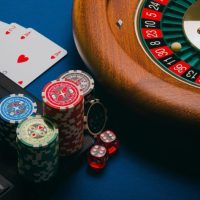







Roulette is one of the most recognizable casino games in South Korea, from the tables of Kangwon Land and the foreigner-only casinos in Seoul, Busan and Jeju to the live-dealer studios streamed online. The game looks simple, yet behind that simplicity sits precise mathematics, and small details such as the number of zeros on the wheel or a single table rule can double the cost of the same entertainment. Misconceptions are just as common as the game itself: “hot” numbers, color streaks and betting systems that promise steady profits.
An analysis of real session data leads to a clear conclusion: most long-term losses on roulette are explained not by bad luck, but by the choice of wheel, the type of bet and the pace of play. Comparing sessions of equal length and equal stakes shows that a double-zero wheel costs almost twice as much as a single-zero wheel, and that certain bet types carry a noticeably higher edge than the rest. That is why the first step should always be checking the rules and payout table of each table before the first spin. At Winum casino, the rules, limits and wheel type of each live table can be reviewed before placing a bet, and that information is the starting point for every calculation in this guide.
How Roulette Generates the House Edge
The house edge is the average percentage of each bet that the casino keeps over the long run. In roulette, it comes from a small gap between the true probability of a bet and the amount it pays.
A straight-up bet on a single number pays 35 to 1. On a European wheel, however, there are 37 pockets: the numbers 1 to 36 plus a single zero. If the wheel had only 36 pockets, a 35-to-1 payout would be perfectly fair. The extra pocket, the zero, is what creates the margin.
On an American wheel, the problem doubles. A second pocket, the double zero, is added while the payouts stay the same. The result is a house edge of 5.26% instead of 2.70%.
The key insight is that on a standard wheel, almost every bet carries the same house edge. Betting on red, on a dozen or on a single number does not change the long-term cost on a European wheel. What changes is the volatility: how often the bet wins and how much it pays when it does.
Comparing Wheels and Bets: The Real Numbers
The following table summarizes the most common roulette bets and the key figures for each on European and American wheels, along with the French variant that applies the La Partage rule:
| Bet type | Payout | Probability (European) | House edge (European) | House edge (American) | House edge (French, La Partage) |
| Straight up (1 number) | 35:1 | 2.70% | 2.70% | 5.26% | 2.70% |
| Split (2 numbers) | 17:1 | 5.41% | 2.70% | 5.26% | 2.70% |
| Street (3 numbers) | 11:1 | 8.11% | 2.70% | 5.26% | 2.70% |
| Dozen or column | 2:1 | 32.43% | 2.70% | 5.26% | 2.70% |
| Red/black, odd/even, high/low | 1:1 | 48.65% | 2.70% | 5.26% | 1.35% |
| Five-number bet (0, 00, 1, 2, 3) | 6:1 | Not available | — | 7.89% | — |
Three conclusions follow directly from this table.
First, the wheel matters far more than the bet. Moving from an American wheel to a European wheel cuts the cost of every bet almost in half.
Second, the French La Partage rule is the best option available for even-money bets. When the ball lands on zero, half of the stake on red/black, odd/even or high/low is returned, which lowers the edge on those bets to 1.35%.
Third, the five-number bet on the American wheel is the single worst standard bet in roulette, with an edge of 7.89%. It should be avoided entirely.
Calculating the Hourly Cost in Korean Won
The house edge becomes meaningful only when combined with the pace of play. The cost of a session can be estimated with a simple formula:
Expected loss per hour = average bet × spins per hour × house edge
Assuming an average bet of KRW 10,000 and around 40 spins per hour, which is a typical pace at a live table:
- French roulette, even-money bets (1.35%): 10,000 × 40 × 1.35% = about KRW 5,400 per hour
- European roulette (2.70%): 10,000 × 40 × 2.70% = about KRW 10,800 per hour
- American roulette (5.26%): 10,000 × 40 × 5.26% = about KRW 21,040 per hour
The same budget, the same stake and the same amount of time can cost nearly four times more depending on the table selected. Automated or “speed” roulette adds another layer: when the number of spins per hour doubles, the expected loss doubles as well, even if the stake stays exactly the same.
When live tables are compared at winum.biz, the same checks come first every time: the type of wheel, whether the La Partage or En Prison rule is offered, the minimum and maximum bets, and the speed of the game. Two tables that look identical can follow different rules, and that difference is written in the table rules, not in the studio design.
Why Betting Systems Do Not Work
Martingale, Fibonacci, D’Alembert and Labouchère are among the most frequently discussed roulette systems in Korean-language gambling forums. Every one of these systems shares the same flaw: no progression system can change the house edge, because every spin is independent of the previous one. The only thing a system changes is how results are distributed over time.
The Martingale is the clearest example. The method doubles the stake after every loss so that a single win recovers everything. Starting at KRW 10,000, seven consecutive losses push the next bet to KRW 1,280,000, with a total amount at risk of KRW 2,550,000, all to win back a net KRW 10,000. On a European wheel, the probability of losing seven even-money bets in a row is about 0.9%. That looks small, but across several hundred spins it becomes a realistic event. On top of that, table maximums usually stop the progression long before the theory says it should work.
The typical outcome of a Martingale session is a long series of small wins followed by one large loss that wipes out everything accumulated and more. The house edge remains intact; only the shape of the loss changes.
Streaks do not predict anything either. The “hot” and “cold” number panels displayed at many live tables are historical records, not forecasts.
Checklist Before a Roulette Session
The practical procedure takes less than two minutes:
- Set the session budget in advance. Only money separated from living expenses should be used, and the amount should not be increased during play.
- Choose the wheel before the table. French roulette with La Partage first, European roulette second, American roulette only when no alternative exists.
- Check the table rules. Confirm the number of zeros, any special rules on zero, and the minimum and maximum limits.
- Fix the bet size. A prudent range is 2% to 5% of the session budget per spin. With a budget of KRW 500,000, that means stakes of KRW 10,000 to KRW 25,000.
- Set a loss limit and a withdrawal target. For example, end the session after losing 50% of the budget, and withdraw half if the budget doubles.
- Activate a time reminder. Live roulette is highly immersive, and time passes faster than expected.
Common Mistakes That Drain the Balance
Session histories reveal the same mistakes again and again:
Choosing American roulette by default. Many lobbies place the double-zero wheel prominently. Without checking, the cost of every bet nearly doubles.
Chasing losses. Raising the stake after a losing streak to “win it back” is the fastest way to exhaust a budget.
Ignoring bonus terms. In many promotions, roulette contributes only 10% to 20% toward wagering requirements, or is excluded completely. Hours of play may barely count toward a rollover.
Legal Context and Responsible Play in South Korea
Gambling regulation in South Korea is strict. Kangwon Land is the only land-based casino open to Korean nationals, while the remaining casinos are licensed exclusively for foreign visitors. Online casino gambling is heavily restricted under Korean law, and the legal status of each form of play should always be verified before taking part.
A low house edge does not turn roulette into a source of income. Deposit limits, session reminders and self-exclusion tools are most effective when activated in advance, in a calm moment, rather than after problems appear. Continuing to play in order to recover losses, playing longer than planned or using money set aside for essential expenses are clear signals to stop and seek professional support. Help is available through specialized gambling addiction counseling services in Korea, and play should only take place from the legal age of majority.
Conclusion
Roulette appears to be pure chance, but its cost is entirely predictable. On a European wheel, every standard bet carries a 2.70% edge; on an American wheel, 5.26%; and on French tables with La Partage, even-money bets drop to 1.35%. No progression system or streak changes those numbers; only the wheel, the table rules, a fixed stake and a controlled pace do.
The practical recommendation is simple: before the next session, open the table rules, confirm the number of zeros and any special rule on zero, and calculate the expected hourly cost in won using the formula in this guide. That two-minute check is the most reliable way to turn roulette into what it should be: entertainment with a known price.








Comentar